Product
Details
Troubleshooting
Follow these guidelines and tips to ensure product quality.
Troubleshooting In Emulsion Products
Fat caps and jelly pockets, green rings and off-odours - these are the nightmares all processors want to avoid in their cured meats. The following is a checklist to help you search for the cause and find remedies for problems you might come across in making emulsified products.
Consistency Too Hard
This can be from a number of causes. Firstly, the percentage lean and/or connective tissue protein could be too high. This means that excessive rind material may have been used. It can be remedied by using the correct sausage formulation. The second cause could be that too little ice water was used. To remedy, increase the ice water quantity in the formulation. If one is manufacturing under a vacuum, the vacuum could be drawn at too high a level. To rectify this, reduce the vacuum time and intensity. If too much soya protein or starch was used, the consistency will also be too hard; correct the formulation and your problem will be solved.
Consistency Too Soft
In this case, it means not enough connective tissue protein is going into the emulsion. Increase the percentage lean and the ratio of tendon rich meat. Sausage emulsion that is excessively processed in a bowl cutter destructs the connective tissue structure. Keep the required process temperatures in mind throughout the process. The bowl cutter must also be checked for mechanical defects such as blunt cutting edges on the bowl cutter knives. Another remedy to the problem could be to increase the percentage of soya protein or starch used in the formulation.
Fat Caps And Jelly Pockets
This happens because of borderline or unstable emulsion that causes air to be incorporated during the cutting or filling process. These air pockets are then filled with gelatine if the emulsion has borderline stability. If too much collagen protein and insufficient salt myosin protein are used, fat caps and jelly pockets form too. High fat and high collagen ratios have similar consequences.
Fat Rendering, Fat Pockets And Greasing Out
The breakdown of emulsion could be caused by:
- too much collagen protein used.
- too much frozen meat used.
- overcooking of product.
- too much frozen fat used.
- too much product rework.
- emulsion chopped for too long, so that not enough soluble protein is available to coat and stabilise the fat globules.
- emulsion at elevated temperatures.
- emulsion held too long under pressure before filling.
- emulsion overworked during transfer through pumps and pipes.
- product being underfilled.
- product not filled properly.
If frozen meat is held at -4° to 20° C, the resulting formation of large ice crystals will rupture cell structure and denature the protein. Thus the binding capacity and emulsion stability will be reduced.
Fat Rendering At Tip Of Smoked Sausage
In this case the surface may have a slightly greasy touch as well. The cause could be:
- too much heat during cooking.
- too rapid heating.
- insufficient salt soluble protein to stabilise the emulsion.
With heating, fat globules expand while the protein firms and shrinks, thus the fat ruptures the protein matrix.
Colour: Green Patches
- nitrite burn because of excessive use.
- nitrite burn because of improper distribution thereof.
- undercured due to too short a cooking time.
- undercured due to too low a temperature in the cold curing room.
Colour: Surface Greening
This happens because relatively salt resistant bacteria that are capable of growing at refrigerated temperatures, start growing. The causes could be one of the following:
- improper hygiene of working surface.
- an improper cooking cycle.
- inadequate refrigeration of the finished product.
- freshly prepared products were exposed to product returns.
Discolouration In Products
This means that air has been included into the casing by either:
- a faulty filling machine.
- a damaged stuffing horn.
- air trapped in the meat emulsion as it was placed in the filler.
Grey Spots
This occurs commonly with discolouration because:
- the curing phase is too short for colour development.
- of an insufficient thermal process.
- cooking was not in line with the casing calibre.
Colour Faded Or Smeared At Time Of Filling
- meat was too warm during cutting in bowl cutter.
- meat was too warm during filling.
- sausage emulsion material left standing too long during the process.
Casings Break During Cooking
- correct core temperature of product exceeded.
- product is heated too quickly.
- percentage connective tissue used was too high.
- on was kept in the cold room overnight causing the interior temperatures to be lower than nomal.
In the case of heating the products too quickly, the surface sets and shrinks while the inside remains wet.
Excessive Shrinkage
This happens during cooking because:
- too much fat was used.
- soft fat such as that of pork was over-chopped.
- excessive moisture-loss took place.
- the low water holding capacity of the emulsion.
- PSE pork was used.
- ingredients were not mixed for long enough.
Wrinkling Of Casing
- After refrigeration dip into hot water (90° C) for ±5 seconds.
Pale Products
This occurs when the:
- curing dosage level was too low for thorough, lasting colour development.
- smoking process took place under too high a relative humidity.
- smoking process was not long enough.
- sausages are hanging too close together during the smoking process, thus smoke cannot penetrate all of the casing surface.
Lack Of Flavour
This means the levels of spices and seasonings or salt are inadequate. Standardise flavourings by accurate weighing procedures, or use seasonings in pre-weighed unit Batchpacks.
Musty, Weedy Off Odour
This means that there was bacterial growth due to:
- insufficient salt.
- poor hygiene.
- abusive storage temperatures.
Odour, Flavour Or Rancidity
This happens when:
- raw materials are stored for too long and fat materials have already changed to a rancid state.
- there are air leaks in the package.
- storage life is extended for too long.
- the products were exposed to light for too long during storage.
- the product is still moist when packed.
- bacterial enzymes start growing.
Troubleshooting in Fresh Products
It sometimes happens that fresh products such as boerewors, wors etc. take on an unpleasant dark colour soon after manufacture. To prevent this occuring in your products, ensure that you adhere to the following tips.
- Keep to the recommended recipe as the levels of preservatives have been accurately determined for the final product by our Research and Development Laboratory.
- Always thoroughly rinse buckets and containers used to decant tapwater, as they may be contaminated with nitrate dust.
- Always ensure equipment used for the manufacture of fresh products is located well away from the cured/processed products line. This is because curing salts contain nitrate which easily dusts. This will settle on equipment and product, causing contamination. For this reason it is always advisable to wash equipment properly and to additionally rinse equipment before using.
- Saltpetre will cause a curing reaction in the fresh product causing it to darken, looking old and stale. This process will reverse on cooking, giving the cooked product a raw cured appearance. Ascorbic acid can be used to enhance colour.
- Meat quality is the most important factor in the manufacture of fresh products. The use of old/off meat will accelerate the deterioration of colour and product by bacterial growth.
- Always rehydrate/dissolve the Batchpack in some of the iced water to ensure an even distribution of spices, salt and most importantly, the preservatives in the ingredients.
- Blunt or unpaired knives, blades and plates will cause:-
- breakdown of muscle protein, allowing bacteria to multiply rapidly and cause spoilage and discolouration of products;
- heat generation due to the friction, which may result in a pale grey product.
Discover Our Products
Food Ingredients
We offer the most comprehensive, diverse and innovative range of products to satisfy all the needs of the meat and food industries.
Natural Sausage Casings
Crown National is a supplier of natural hog and sheep casings of superior and consistent quality to customerrs situated across Sub Saharan Africa.
International Ingredients Principals
Our International Principals are integral to the success of our business. Through our International Principals we have access to world-class technical support and cutting edge ingredient solutions.

Cellulose and Collagen Casings
High quality cellulose and collagen casings that are attractive and easy to use.
Packaging
Crown National ensures that our customers have access to the latest in packaging quality and technology. We guarantee quality, size and quantity at all times.
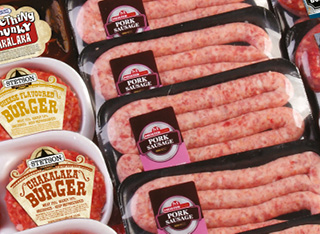
Product Labels
Crown National offers you the product labels of excellent quality for a wide range of products.
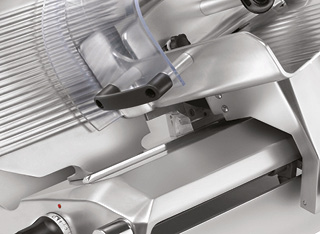
Retail Meat Equipment
Crown National supplies high quality meat processing equipment to the butchery and food industries. We pride ourselves on being innovative and reliable, providing unequalled service.
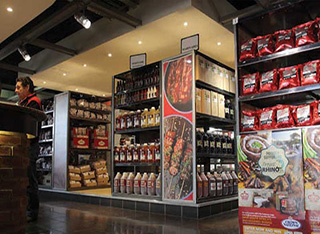
Retail
In line with living our motto of "We're here to help, we have developed a comprehensive range of flavourful products, specially designed to give you, the retailer, a range of extra products to boost you bottom line. We continue to innovate and adapt our offering at affordable prices in the most attractive sizes to complement your revenue stream, by selling retail type products direct to your customers.
We also advertise these products on your behalf on Toks and Tjops, channel 144 DSTV, through our various sport sponsorships and our social media platforms.
It is a privilege for us to offer you the opportunity to sell our products directly to your customers through your business, thereby providing you with a further opportunity to generate income.
The range of tried and tested products supported by our Microsafe® Food Safety programme complement the sale of your other food products to the consumer.